

Are you tired of leads slipping through the cracks? Whether you run a local service, restaurant, or retail business, a well-built sales pipeline can help you stop losing prospects and start gaining loyal customers.
At Planet Marketing, we believe that a sales pipeline isn’t just a fancy business term—it’s your step-by-step system for turning interest into income. With the help of our AI Employee, managing this process has never been easier. Let’s break it down.
Learning customers’ buying behavior
Before you can build a sales pipeline, you need to know how people buy from you. Are they searching online? Do they need a quote? Are they comparing multiple businesses? Understanding your customer’s buying behavior helps you pinpoint where your leads come from, what information they need, and what obstacles may be preventing them from taking the next step. For example, do they trust online reviews? Are they influenced by price, speed, or convenience? Do they require education before making a decision? By answering these questions, you can design a pipeline that speaks directly to their needs and increases your chances of conversion.
Understanding the buyer’s journey helps you map out each phase of your sales pipeline—from awareness to decision—so you can meet them where they are and guide them forward. For example, a lead in the awareness stage might need educational content or social proof, while a lead in the decision stage may be looking for pricing or testimonials. By aligning your messaging and touchpoints to each stage, you create a more personalized experience that builds trust and shortens the sales cycle.
Define each stage of your pipeline
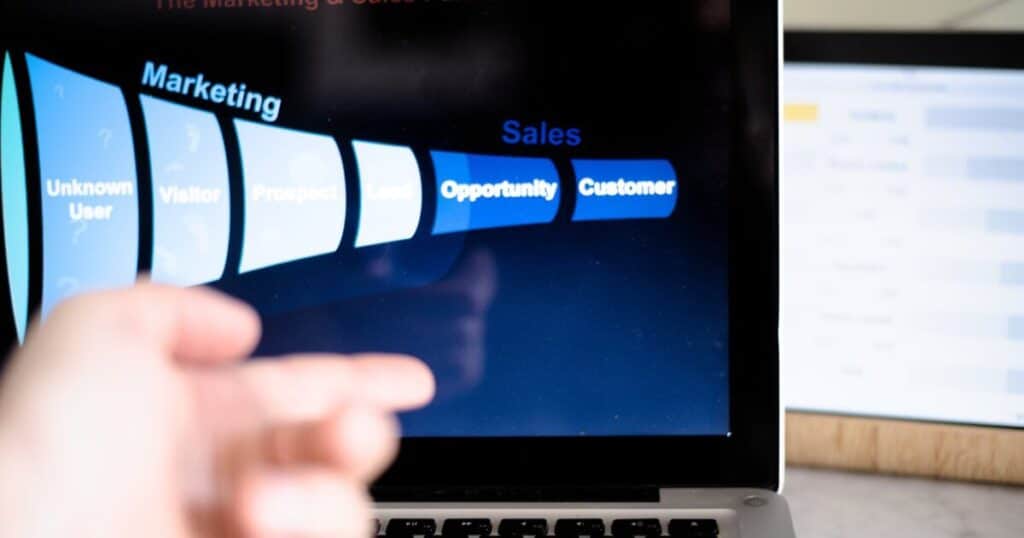
Clear stages help you stay organized, focused, and ready to act at the right moment. A typical pipeline might look like this.
✔️ Lead Captured: This is where the journey begins. A visitor fills out a contact form, sends a message on social media, or calls your business. At this stage, it’s crucial to capture their details accurately and ensure your system—ideally powered by automation like our AI Employee—is ready to store and track their info instantly.
✔️ Initial Contact: Now it’s your turn to respond quickly. A prompt and professional reply builds trust and keeps the conversation going. Whether it’s a phone call, email, or automated message, the goal here is to make the lead feel seen and heard.
✔️ Qualification: Not every lead is a good fit. This stage involves asking the right questions to determine if your solution matches their needs and budget. Qualifying helps you avoid wasting time on leads that are unlikely to convert.
✔️ Presentation or Quote: Once qualified, it’s time to present your solution. This could be a product demo, a proposal, or a price quote. Your presentation should be tailored to their needs and show how your business provides value over competitors.
✔️ Follow-Up: Most leads won’t buy immediately. Follow-up is where deals are won or lost. Use a series of reminders, educational content, or limited-time offers to re-engage leads who need more time to decide. Our AI Employee can automate these follow-ups so no lead falls through the cracks.
✔️ Closed Deal: Finally, the deal is either won or lost. If you’ve guided them effectively, answered their questions, and shown the value of your offer, you’re more likely to seal the deal. And if not? Use the feedback to improve your process and win the next one.
Identifying your dream customer
Every local business has an ideal customer—someone who needs your services, respects your time, and pays on time. When you build your pipeline, think about who you want to attract. Are they homeowners, small business owners, busy professionals, or budget-conscious families? The more specific you are, the better you can tailor your messaging, offers, and sales tactics. Developing customer personas based on real data helps you anticipate their needs, objections, and behavior patterns. This insight enables you to design a pipeline that speaks directly to them, making it easier to guide them from first contact to closed deal.
With the help of tools like our AI Employee, you can tag and segment your leads automatically, so you’re spending more time with quality prospects and less time chasing dead ends. By organizing leads based on behavior, interests, and demographics, your team can tailor outreach strategies that resonate more personally with each segment. Whether you’re targeting high-intent buyers or nurturing early-stage leads, this level of precision allows you to prioritize efforts where they matter most. Plus, it makes your entire pipeline more efficient and scalable—especially as your business grows.
Lead scoring helps you rank your prospects
Not all leads are created equal. Some are just browsing; others are ready to buy today. Understanding the difference helps you invest your time and resources where they’ll have the biggest impact. Warm leads might need a little nurturing to move forward, while hot leads should be prioritized for direct outreach. Cold leads, on the other hand, may require long-term strategies like email drip campaigns or retargeting ads. By using lead scoring, your team can recognize which leads to engage immediately and which ones to nurture over time—making your entire sales process more efficient and effective.
Use lead scoring to help you rank your prospects based on actions they take (e.g., opening emails, clicking links, visiting your website repeatedly). The higher the score, the hotter the lead.
Our AI Employee can automatically score leads and notify you when it’s time to follow up. It evaluates user behavior like page visits, time spent on your site, and engagement with emails or ads to assign a lead score. When a lead hits a certain threshold, your team is alerted to take action—whether it’s sending a personalized message, making a call, or triggering a targeted campaign. This proactive approach reduces response time, increases engagement, and ensures you’re connecting with prospects at the most opportune moment.
Start managing your pipeline with automation
Manual follow-ups and sticky notes just don’t cut it anymore.
That’s where automation comes in. Planet Marketing’s AI Employee can:
✔️ Send instant replies to inquiries: The moment someone reaches out through your website or social media, an automatic response can be sent to acknowledge their message, provide additional info, or route them to the right resource. This quick response time builds trust and keeps the lead engaged.
✔️ Schedule follow-up messages: Whether it’s a reminder email or a gentle nudge to complete a quote request, automated follow-ups ensure consistent communication without manual effort. These timely touches help keep your business top-of-mind until the lead is ready to convert.
✔️ Notify your team about hot leads: When a lead meets certain criteria—like visiting your pricing page multiple times or clicking on key calls to action—your team gets an alert. This ensures your reps can jump on high-intent prospects when they’re most interested.
✔️ Track where each prospect is in your funnel: Knowing whether a lead is in the awareness, consideration, or decision stage allows you to tailor your outreach. Automation keeps tabs on this and updates their pipeline stage in real-time, ensuring no lead is left behind or forgotten.
When your sales and marketing are on the same page, magic happens
Make sure your marketing efforts (ads, social media, email campaigns) are designed to move leads through the pipeline—not just generate interest. Your pipeline should be a continuation of your messaging, not a separate process. For instance, imagine a local landscaping company running Facebook ads to promote free lawn inspections. Once a lead clicks the ad and fills out a form, an automated email sequence begins, providing tips on lawn care and showcasing success stories. As the lead moves closer to booking, they receive a personalized offer or follow-up call. This coordinated effort ensures the lead flows smoothly from curiosity to commitment.
With Planet Marketing’s digital tools, you can create campaigns that bring in traffic and convert it.
Monitor, improve, repeat
Building a pipeline is not a one-time task—it’s ongoing. To stay competitive and efficient, you need to track, analyze, and adjust continuously.
Track key metrics like:
✔️ Conversion rate at each stage: Measure how many leads move from one stage to the next. A low conversion rate in a specific stage may indicate a weak point—such as unclear messaging, poor follow-up, or lack of trust. Identifying bottlenecks allows you to fine-tune your strategy and improve flow.
✔️ Average time it takes to close a deal: This helps you understand your sales cycle. If deals are taking too long to close, you might need faster follow-ups, stronger incentives, or better qualification processes. Reducing the time-to-close can directly boost your revenue.
✔️ Where most leads drop off: If a large number of leads fall off before reaching the final stages, investigate what’s causing friction. Is your pricing unclear? Are your emails going unopened? Pinpointing these drop-off points lets you optimize specific touchpoints for better retention.
Use this data to refine your process regularly. Your AI Employee can generate reports and highlight patterns so you can make smarter, faster decisions. And don’t worry—we can help with that too.
Build a sales pipeline that works for you
You don’t need a big sales team to build a big impact. With the right strategy and the right tools—like Planet Marketing’s AI Employee—you can manage leads, automate follow-ups, and close more sales with ease.
Whether you’re just starting or looking to tighten up your process, we’re here to help. Learn how to create a sales pipeline that converts leads into customers. Discover expert tips and automation tools from Planet Marketing—perfect for growing local businesses.
Looking to build a powerful sales pipeline? Get in touch with Planet Marketing today and take the first step toward growing your business. Our team is here to help you turn leads into loyal customers. Let’s make your sales process smoother and more effective than ever.